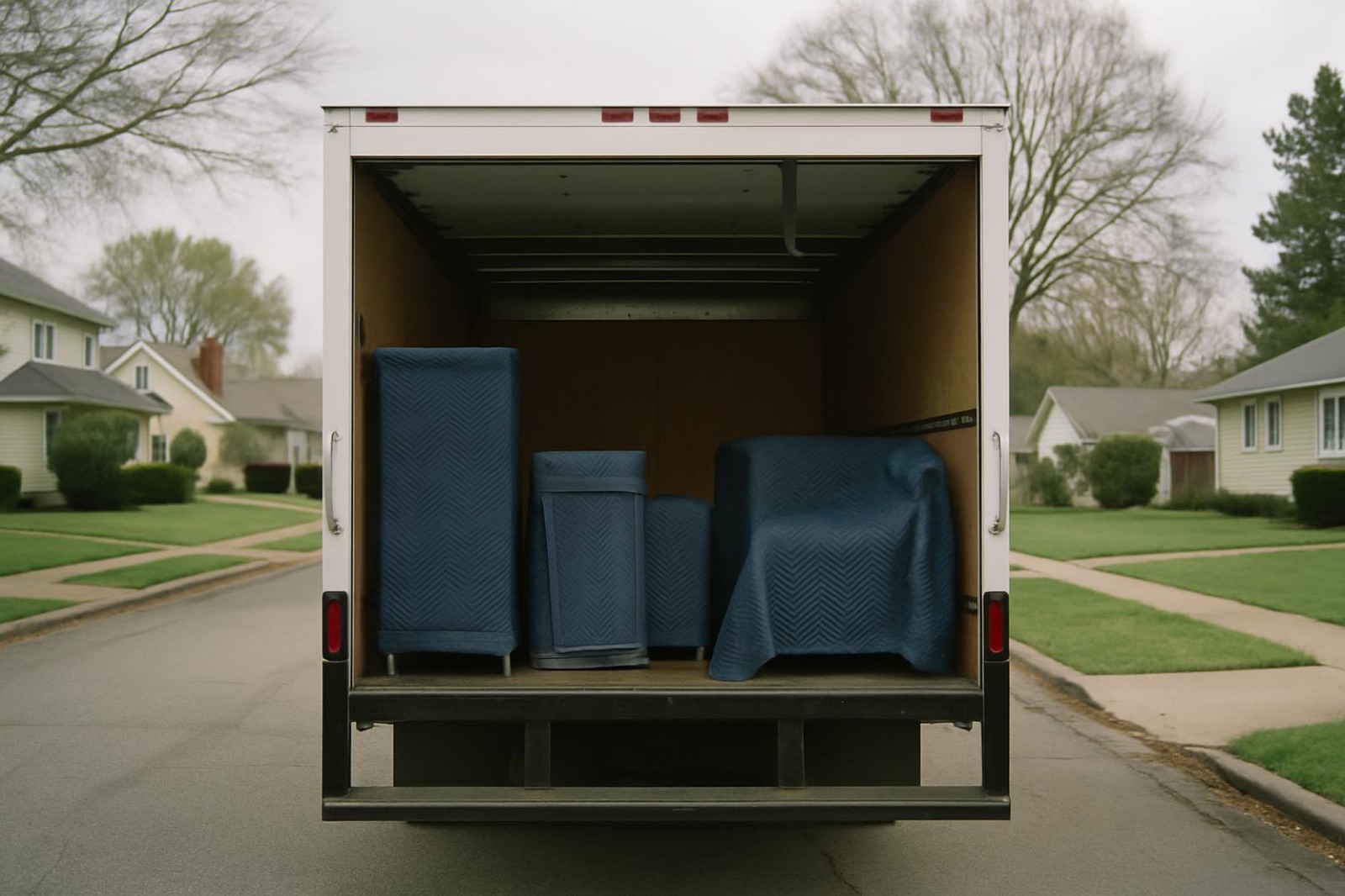
Wye Road and Baseline Road on a weekday morning
Wye Road and Baseline Road both carry heavy commuter traffic into Edmonton on a weekday morning, and a truck stuck in that flow burns time that was supposed to go into loading. We try to book the first move of the day early enough to clear both roads before the worst of it builds.
A late afternoon move faces the same problem in reverse, so a job scheduled around noon often makes better use of the crew's hours than one bookended by rush hour on both sides.
The gravel range roads east toward Ardrossan
Past the edge of Sherwood Park the roads turn to gravel range roads on the way toward Ardrossan and the acreages scattered around it. A range road that is smooth and packed in August can be a washboard mess after a wet week, and the truck needs to slow down accordingly rather than keep highway speed onto a dirt surface.
During harvest season these same roads carry grain truck traffic that we plan our timing around, since a loaded moving truck meeting a combine on a narrow range road is not a situation either driver wants.
Cooking Lake and Antler Lake in the warmer months
Moves around Cooking Lake and Antler Lake pick up in the warmer months, when cottage owners swap properties or move in for the season. The lanes into these communities are narrower than a typical subdivision street, and some end in a loop with no easy spot to turn a full size truck, so we scout the approach before booking a firm arrival time.
Soft shoulders near the water are common after a wet spring, and backing a loaded trailer off the packed lane to let another vehicle pass is not something we want to do twice in one afternoon.
What spring thaw does to a rural driveway
Some rural roads and driveways around Strathcona County soften considerably during spring thaw, well before the surface looks anything but solid to the eye. A driveway that held a truck fine in February can rut badly in April, so a spring booking on an acreage gets a call ahead to check current ground conditions rather than relying on what the road looked like last time.
Where a driveway is genuinely too soft for the truck, we carry loads out to a firmer spot on foot or with a smaller vehicle rather than risk getting stuck halfway up the lane.
Fog along the river near Fort Saskatchewan
The North Saskatchewan River valley near Fort Saskatchewan holds fog later into the morning than the open ground around Sherwood Park or St. Albert, especially on a cold, still day in the shoulder seasons. A job starting on the riverside end of town sometimes begins in reduced visibility even after Sherwood Park has cleared, and the crew adjusts the first hour of driving accordingly.
It usually burns off within an hour or two, but an early start near the river gets extra care rather than the usual pace.
Why we build in extra time across the county
A move that starts in Fort Saskatchewan and ends near St. Albert or Leduc crosses several different road conditions in one trip, from riverside streets to highway to a mature inner community, each with its own quirks. Rather than quote a single travel time based on the map distance, we build in a buffer that accounts for whichever of these stretches is likely to be slowest that day.
It is a small thing, but a crew that is not rushing the drive handles the unload with more patience at the other end, and that shows up in how carefully the last few items get placed.